
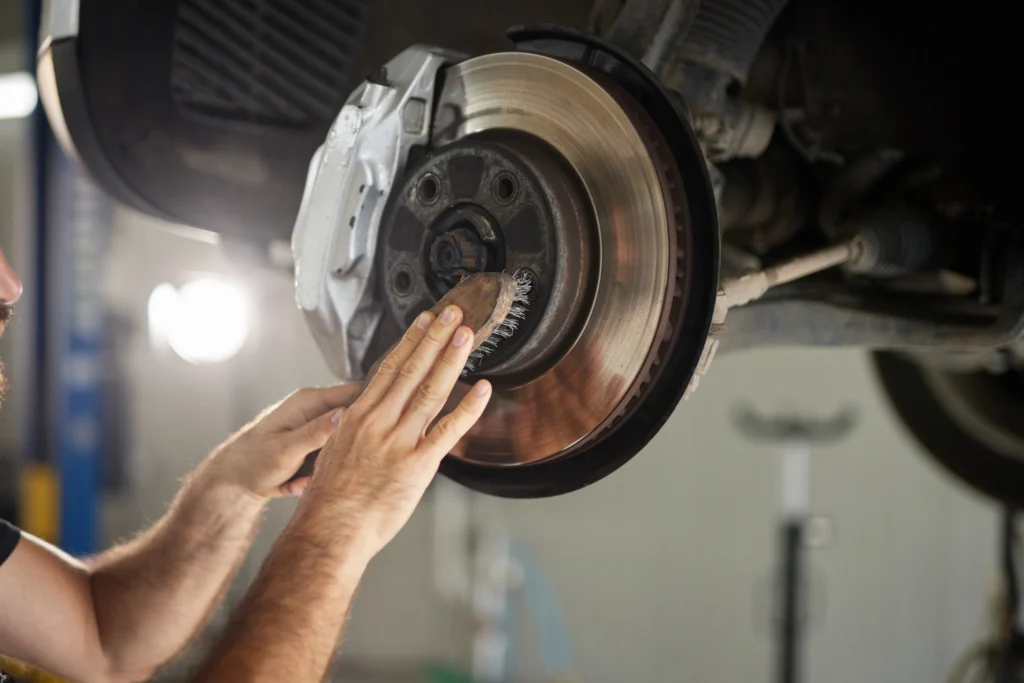
No part of your car plays a bigger role in protecting you than the brakes. Yet many Collinsville, IL drivers ignore small problems until they become expensive — or dangerous. Understanding common brake warning signs can help you avoid breakdowns, prevent accidents, and save money on repairs. Below are the most common symptoms your vehicle is asking for attention and why acting quickly matters.
High-Pitched Squealing Sounds
One of the earliest signs of trouble is squeaking brakes. Modern brake pads are designed with wear indicators that produce a sharp squeal when the pad material is getting thin. While the noise may seem minor, it’s your vehicle’s built-in alert system. Waiting too long can wear the pads completely down, leading to rotor damage and a much higher repair bill.
Grinding or Growling Noises
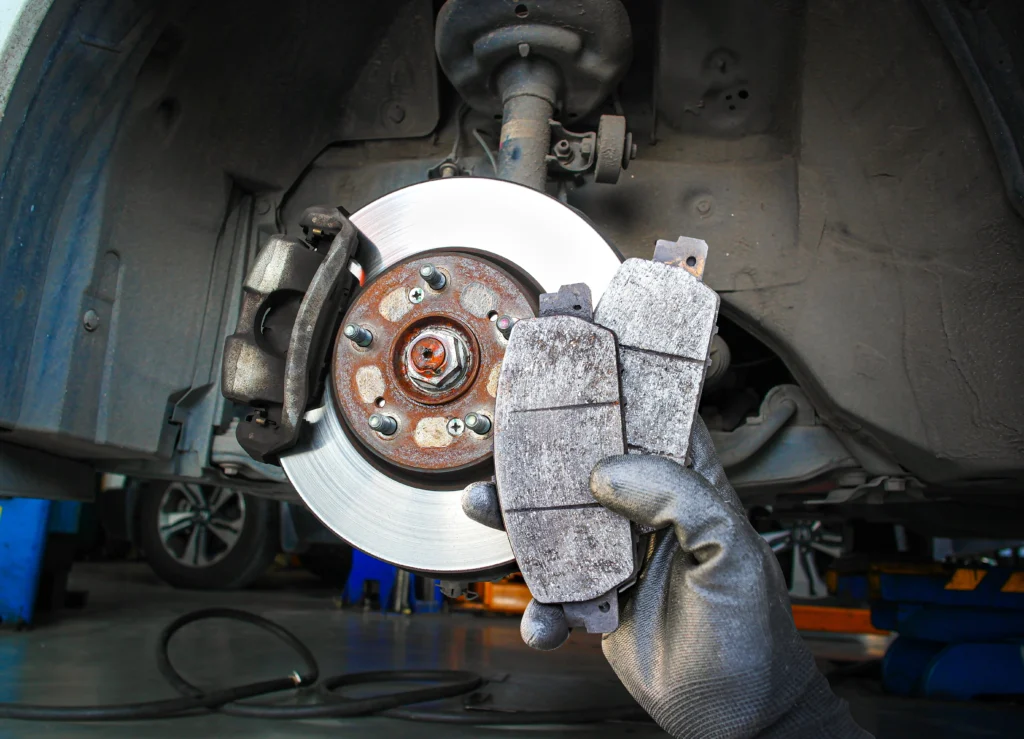
Grinding brakes are never something to ignore. This usually means the brake pads are completely worn, allowing metal components to rub directly against the rotors. At this stage, your stopping power is already compromised. Driving any further risks damaging the rotors, calipers, or even the wheel hub, turning a basic brake repair into a major replacement job.
Vibrations or Pulsing While Stopping
A vibrating steering wheel or pulsing brake pedal while stopping is often a sign that your rotors are warped. This vibration reduces your control and increases stopping distance. In Illinois winter conditions where roads can be slick, this problem becomes even more dangerous.
Brake Pedal Feels Soft or Spongy
Your brake pedal should feel firm. A soft or sinking pedal could indicate air in the brake lines, a brake fluid leak, or a failing master cylinder. These problems reduce hydraulic pressure and can lead to partial or complete brake failure if not handled quickly.
Pulling to One Side
When your vehicle drifts left or right while braking, it may point to uneven brake wear, stuck calipers, or brake fluid contamination. This imbalance puts stress on your suspension system and makes emergency stopping unpredictable.
Warning Lights on the Dashboard
Today’s vehicles use built-in monitoring systems to warn you when a problem is detected. If your brake light or ABS warning light appears, it’s time to schedule a car brake inspection. These systems are designed to detect issues before you can feel them, making early service crucial.
Burning Smell After Driving
A sharp, chemical-like odor coming from your wheels is often overheated brakes. This can happen after hard stops or driving with a stuck caliper. Overheated brakes lose friction, which can lead to brake fade and sudden loss of stopping power.
Why Ignoring These Signs Costs You More
Many Collinsville drivers search for brake service near me only after the problem becomes severe. Unfortunately, delaying service rarely saves money. What starts as worn pads often becomes damaged rotors, seized calipers, or contaminated brake fluid. Minor fixes quickly turn into expensive repairs when left unchecked. Failing brakes don’t just affect your car — they endanger everyone sharing the road with you. From busy Belt Line Road to interstate traffic nearby, dependable braking performance is non-negotiable.
Stay Ahead of the Problem
Routine maintenance is the easiest way to avoid surprises. A professional brake repair shop can measure pad thickness, inspect rotors, check fluid condition, and ensure your entire braking system is functioning correctly. Regular inspections are especially important after winter months when salt, moisture, and temperature swings take a toll on components.
If you notice any of these brake warning signs, don’t put it off. Addressing issues early protects your vehicle, your wallet, and most importantly — your life on the road in Collinsville, IL. Call Full Circle Auto Services if you need to have your brakes looked at.